

Skylight Leaks in Winter Rains: Curbs, Flashing & Condensation Misdiagnoses
Cold winter rains in Maryland often arrive when homes are sealed tight against the weather. Indoor humidity rises, glass stays cold, and skylights become one of the first places homeowners notice dripping water. During every storm, our team hears from families worried about a skylight leak that Maryland weather might have aggravated. Sometimes that drip comes from worn skylight flashing or a failing curb detail around the opening. Other times, the problem is not a true leak at all. In those cases, condensation on skylight glass comes from moisture inside the home. At S&K Roofing, we help homeowners sort out the difference so they can protect their roofs, ceilings, and natural light.

Skylight Anatomy: Curbs, Underlayment & Step Flashing
Every solid skylight installation starts with the parts you rarely see from inside the house. The skylight frame rests on a raised box called a curb that keeps the unit above the roof surface. A properly built curb detail sets the right height, slope, and alignment for long-term performance. Underlayment wraps and seals around that curb, tying it into the surrounding roof deck and shingles.
On top of the shingles and underlayment, skylight flashing directs water away from the opening. Step flashing pieces overlap like shingles along the sides of the curb. Head and sill flashing protect the top and bottom. On some roofs, counter flashing or special side pieces add another layer of protection at the shingle line.
When these layers work together, rain sheds cleanly, even in a heavy storm. Problems begin when the curb detail is too low, poorly sealed, or not integrated with the roof system. We often find missing step flashing, cut corners in the underlayment, or sealant used where metal should protect. In those cases, water can back up around the curb during heavy rain. It may appear as a skylight leak that Maryland homeowners first spot on ceilings or walls. Our technicians focus on the full assembly, not just the visible glass, when we inspect a leaking skylight.
- A curb detail with the right height and slope for the roof pitch
- Underlayment that wraps the curb and seals to the roof deck
- Step and head skylight flashing that overlaps correctly with shingles
- Counter flashing or trim pieces that protect exposed joints and corners
Diagnose the Drip: True Leak vs. Condensation
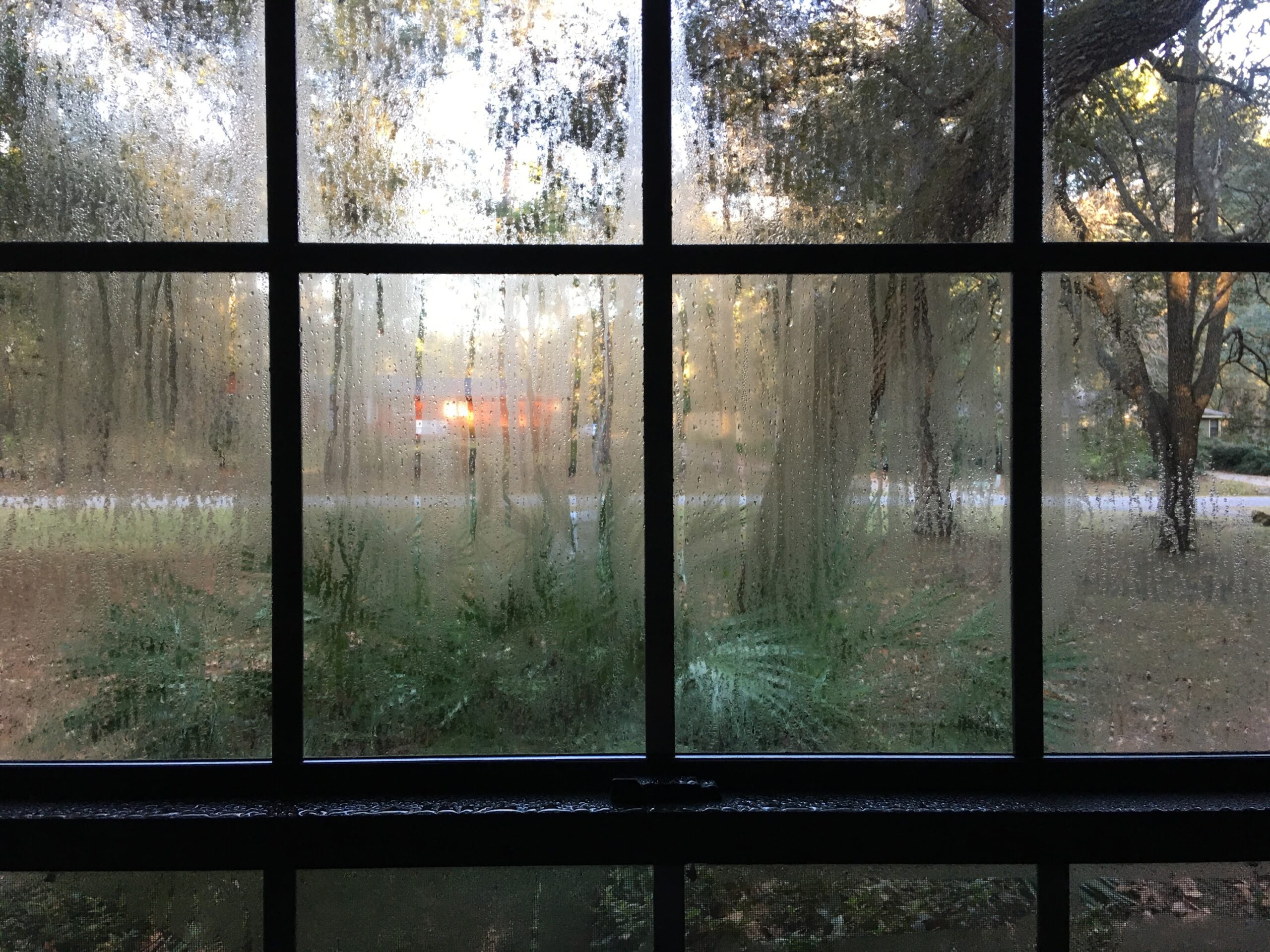
Not every wet spot near a skylight comes from the roof surface. In cold, wet seasons, warm indoor air carries moisture that can show up as condensation on skylight glass. That condensation on skylight surfaces forms when humid air meets very cold glass or framing. Drops can run down the frame, soak into drywall, and look exactly like a leak. This is one reason many skylight leak calls in winter turn out to be indoor humidity problems. Our first step is to listen closely to learn more about what you are seeing and when it happens. We look at weather patterns, room use, recent changes to the home, and the age of the skylight.
Signs of a true leak often include staining that appears after wind-driven rain. Other clues are damaged shingles or failing skylight flashing outside. Condensation issues often show up on frigid mornings, especially in bathrooms, kitchens, or high-ceiling spaces. You might notice fogged glass or water on the interior frame. Some homeowners see damp spots that appear and dry in a regular cycle.
We inspect from inside and outside the home. That helps us separate moisture from a roof leak and moisture from the air. Once we know if the problem is flashing, curb detail, or condensation on skylight glass, we suggest a repair plan.
- Water stains that appear only after steady or wind-driven rain
- Drips that start higher on the ceiling and travel along framing
- Visible shingle damage or exposed skylight flashing on the roof
- Moisture or fog on the glass during very cold mornings
- Water on interior trim in rooms with high everyday humidity
- Damp spots that appear and dry in a regular pattern through the season
Repairs & Upgrades: New Flashing Kits, Low-E Glass & Shades
When a skylight leak Maryland homeowners report comes from worn or missing skylight flashing, the solution usually starts on the roof. Our team may recommend a new flashing kit designed for the roof pitch and roofing material on your home. Modern kits include carefully shaped step flashing and head flashing that work with newer underlayment products.
We rebuild or adjust the curb detail as needed, so water flows away from the opening. During this work, we also look at the age and condition of the skylight itself. Older acrylic units can lose clarity, become brittle, and contribute to heat loss in winter. Upgrading to a modern glass skylight can add comfort as well as reliability.
Many current units feature Low E insulated glass that holds heat better and stays closer to room temperature. That can help reduce condensation on skylight glass because surfaces do not get as cold. Some models also offer between-the-glass blinds or interior shades that help control heat and glare.
Our skylight specialists review options from our trusted manufacturers so you can choose the right balance of light and efficiency. If your home already has a quality skylight but struggles with moisture, we may still improve the roof side. Our team can pair new skylight flashing and underlayment with interior changes. Better bathroom fans, kitchen range ventilation, and balanced whole-house airflow can all lower indoor humidity.
We coordinate these roofing and skylight upgrades through our dedicated skylight services team. During a visit, we explain which parts of the system are most at risk. We also review which upgrades offer the best value. That way, you can plan repairs or replacements around your budget and your schedule. You can also match work to your long-term goals for the home.
Keep the Light, Not the Leaks
Skylights bring natural light, sky views, and a sense of space that many Maryland homeowners love. They should not bring worry every time rain shows up in the forecast. When moisture appears, our goal is to protect that light while solving the source of the problem.
We draw on years of skylight and roofing experience to assess curb detail, underlayment, shingles, and skylight flashing together. Our technicians also understand how insulation, ventilation, and daily living habits influence condensation on skylight glass. That combination helps us avoid quick fixes and recommend lasting solutions. As a full-service roofing contractor, we stand behind our work and stay available for future questions. You can learn more about our history, team, and service area by visiting our About page.
If you are concerned about a possible skylight leak that Maryland storms have revealed, we are ready to help. Schedule a professional inspection so we can evaluate the skylight, the roof around it, and the conditions inside your home. Book a Skylight & Roof Inspection today and let our team at S&K Roofing keep the light in your home without the leaks.


see our work